- HomeHome
- DiningDining
- Venues & EventsVenues & Events


Kiki Sjoberg’s “Lay of the Land” at Leonard Mattis Studio for Head On Photo Festival
 Share
Share


 Share
Share
By Benjamen Judd
As part of the Head On Photo Festival running from May 1 to May 31, I was privileged enough to be able to interview Sydney-based photographer Kiki Sjoberg for LEONARD MATTIS STUDIO.
Kiki’s latest exhibition “Lay of the Land” will be launching at LEONARD MATTIS STUDIO Tuesday May 19, and will run until June 1.
Incredibly talented and just a wonderful person all round, Kiki’s work is a stunning collection of landscapes from various regions in Australia.
Read my interview with Kiki for LEONARD MATTIS STUDIO below.
Art, and in particular photography, is an interpretation of reality. Or more appropriately, reality as we see it.
Susan Sontag once wrote, “photographs are a way of imprisoning reality, understood as recalcitrant, inaccessible; of making it stand still…One can’t posses reality, one can posses (and be possessed by) images”.
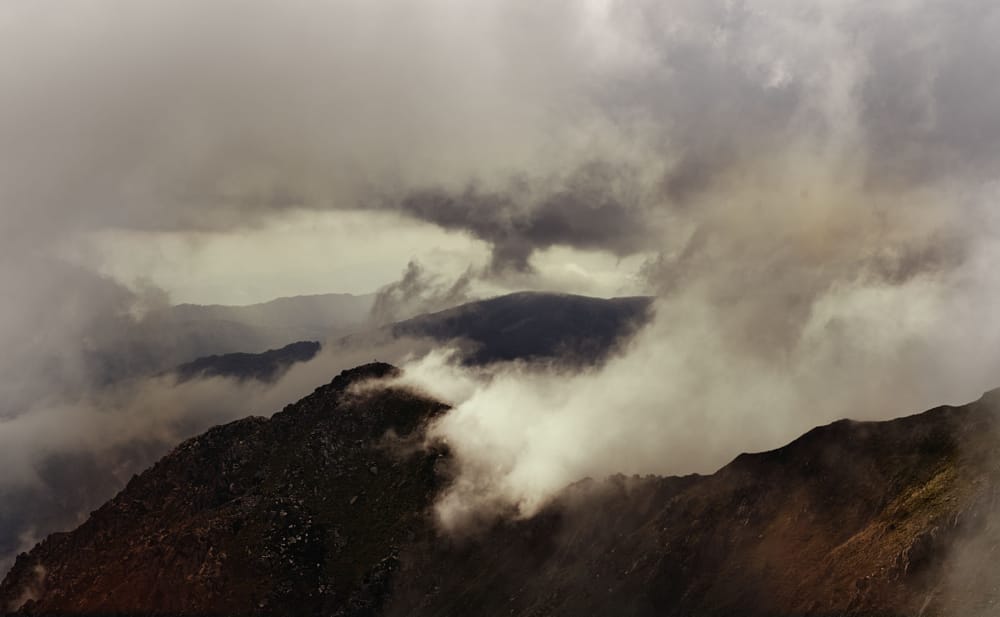
In Kiki Sjoberg’s latest exhibition (running as part of Head On Festival) , ‘Lay of the Land’, reality becomes something that is both personal and alien. Inspired by the work of British painter William Turner, Kiki presents a series of emergent landscapes that sit somewhere between dark and light.
Much like Turner’s paintings captured the beauty of the sea through the violence of brushstroke, Kiki’s work draws out the beauty of the Australian landscape by highlighting the vast and sinister emptiness that open space possesses.
We sat down with Kiki to chat about what inspired her latest collection of work.
You’ve said that you have had a passion for photography from a young age – what first drew you to this medium?
My father was a very keen photographer, and because of this I grew up being photographed often.
I have five sisters and he documented our childhood with his beautiful photographs. In my parents home there’s a huge bookshelf filled with boxes that are organised into years and events, it is such a beautiful keep safe to have in the family.
I got my first camera when I was about ten years old. When I turned 18 and graduated from high school all I wanted was an analogue camera. My dad brought me a second hand Nickon fm2, which I still have today! I can honestly say that my father has been a huge influence for in foray into the world of photography.
Looking back at your portfolio it’s not hard to miss how incredibly diverse it is – everything from intimate portraiture, fashion to now a more abstract approach to landscape. Is there a subject that you are particularly fond of capturing?
I have always felt drawn to the more abstract visual. Capturing life the way I see it. I feel that photographing landscapes allows me to do that more.
I love to capture beautiful places but from my perspective.
In your latest exhibition, you drew inspiration from English painter William Turner. What drew you to reinterpreting his work?
I remember my first year in art school and every Friday afternoon was art history – the first time I saw a Turner painting I was touched.
At home I tried to paint landscapes the way he did but with no success. Since photography comes more naturally to me, it allows me to use his paintings as inspiration for my work, especially in regards to this current body of work.
How did you choose your locations?
Some of he places I have visited before, like the Snowy Mountains. Others, like Tasmania, were places I was instantly drawn to while scouting for locations.
I was looking for places that both represent the unique Australian landscape but that also had that wild beauty I hoped to capture.
From my own experience back in art school, when people discuss Turner, they tend to do so in terms of light and how he captured that in his painting. But, I admit to being more interested in the way he portrayed darkness, such as his 1842 work ‘Snow Storm’ or even his earlier work ‘Wreckers Off the Coast of Northumberland’. The same quality is something that, I feel, you captured in your own photographs. Was this deliberate? And what was the process behind selecting the tone of the images?
I’m pleased to hear that. I am also drawn to his darker paintings, although I enjoy his lighter works too. While travelling, I realized early on that this body of work was going to be about the beauty of drama and darkness, but still capturing that liquid light.
During the process of working on the images in post-production I found myself experimenting with depth and tone. My background in art, especially oil painting certainly helped me achieve that painted feeling to the photographs, using my camera and post-production as my brushes.
Lastly-what do you think constitutes a good photograph?
For me, a good photograph makes you feel something. Whether it’s joy, sadness or anger. It’s a feeling that draws you to return and look again and again.
‘LAY OF THE LAND’ A solo exhibition by Kiki Sjoberg.
Inspired by the poetic and luminous landscape paintings of William Turner. Kiki travelled to the Snowy Mountains, the Blue Mountains, Tasmania, Kangaroo Valley and the Hawkesbury River region. Each image tells a story and captures the essence of a land that offers such beauty and diversity.
‘Lay of the Land’ opens at the Studio on Tuesday 19th May, 6.30-9pm.
QT Social
Feeling a little social? Follow QT
 Turn on notifications and be the first to know when exclusive deals and limited-time offers drop. View privacy policy
 Powered by
 Enter your details
 - DiningDining


Book
 Close
Search
Close
Search